
A Lasting Legacy Thanks to Covenant and Collaboration
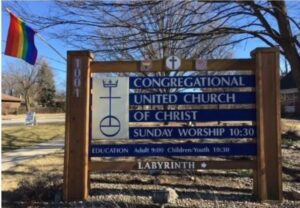
When the Congregational United Church of Christ of Arlington Heights, Illinois was deciding on its future several years ago, the church found itself with few options. Members of the church were discerning that it was perhaps time to consider closure, but they were also discerning how best to honor their legacy as a faithful and generous congregation.
As a new church start in the late 1950s, the congregation’s identity was deeply rooted in community and missional support. “We’ve been mission-focused throughout our history,” said church board member Jeff Pattee.
The church property was situated on 2.5 acres next to a large hospital complex, which had used the church parking lot for years and then bought the property in April 2024. During the time it took for the sale to be completed, the congregation met numerous times to discuss the future.
 In addition to considering legacy, the logistical process of closing a church is complicated and can often feel overwhelming. “Closing is a very difficult and emotional time for church leadership and there are many details to attend to,” said Rebecca Perera, Vice President and Chief of Credit for the Cornerstone Fund.
Thankfully the United Church of Christ financial ministries are able to help. First, the congregation reached out to United Church Funds and then the Cornerstone Fund for support.
“UCF was originally approached by the church through referral based on UCF’s previous experience guiding churches through the process of creating a legacy endowment,” said Matt Wagner, UCF’s Vice President of Institutional Relationships. “In consultation with church leadership, a portion of the legacy endowment would be invested in Cornerstone Fund’s term notes at the discretion of UCF and in alignment with the asset allocation plan in the legacy agreement.”
Additionally, the church was concerned about the continuing financial obligations it would have through the closing process, especially given that they were involved in a major commercial real estate transaction with a large entity. The church was relieved to learn that the Cornerstone Fund could provide a line of credit to the church which could be used to pay for utility bills, legal fees, and other final costs, giving the leadership peace of mind and the ability to manage the church’s affairs without the stress of wondering how to pay. “Cornerstone is ready to support churches in all phases of the church life cycle,” said Cornerstone Fund’s Rebecca Perera.
In the end, due to the sale of the church being moved closer to their closure date, Congregational UCC ended up not needing the line of credit, but knowing it was available relieved a great deal of stress.
Relieved of the logistical stress, the congregation could turn all of their attention to considering the distribution of their assets and the legacy they would leave. “We weren’t going to merge with another church, so we decided to build a legacy endowment with a 20-year life cycle,” said Pattee. “We decided to use half of our assets for immediate grants to agencies we’ve long supported – 23 agencies received that support — and we wanted to use the other half to build an endowment for long-term funding of those agencies.”
This type of endowment, offered by United Church Funds and the Cornerstone Fund, was exactly what the congregation wanted. Rather than giving a one-time donation to the organizations they support, they worked with UCF and Cornerstone to structure a legacy plan so that their preferred agencies get gifts every year for 20 years.
UCF and the Cornerstone Fund also solved one of the church’s first worries about the function of their endowment.
 “Most places we researched (to manage the funds) required involvement from a church member as a trustee of the funds,” said church board member Tom Harris. “We were looking to separate and not have that responsibility – as we were also in the grieving process of saying goodbye of our beloved church.”
UCF and the Cornerstone Fund would manage the funds for the full cycle, requiring no long-term involvement from former church members.
Pattee, Harris, and the entire congregation loved that feature, but the first reason was that their values aligned with UCF’s and the Cornerstone Fund’s. The congregation appreciated that their remaining funds would help other churches and faith-based projects create change in their communities via Cornerstone Fund lending.
“We especially like how Cornerstone Fund investments can support new church starts – that’s what we were back in the 1950s,” said Pattee. “If we can use our money to help someone start a new church, what better legacy is that?”
United Church Funds (UCF) is the leading provider of socially responsible, values-aligned investment management services to United Church of Christ churches and ministries, as well as all faith-based organizations. They offer customized investment portfolios and prudent investment strategies that provide competitive returns while also reflecting their clients’ values in seeking to achieve a just world. UCF also offers endowment governance consulting, planned giving programs and superior, personalized service from their dedicated Client Services team. Learn more at www.ucfunds.org.
The Cornerstone Fund is a non-profit financial institution that offers faith-based and socially responsible investments – which allows them to offer loans directly to churches and faith-based, non-profit organizations to create change in their communities. Their investing program offers an opportunity for individuals and organizations to take part in projects ranging from worship space renovations to transitional housing developments and everything in between.
The Cornerstone Fund offers resources when deciding your legacy, or the legacy of your church. Learn more: cornerstonefund.org/legacy